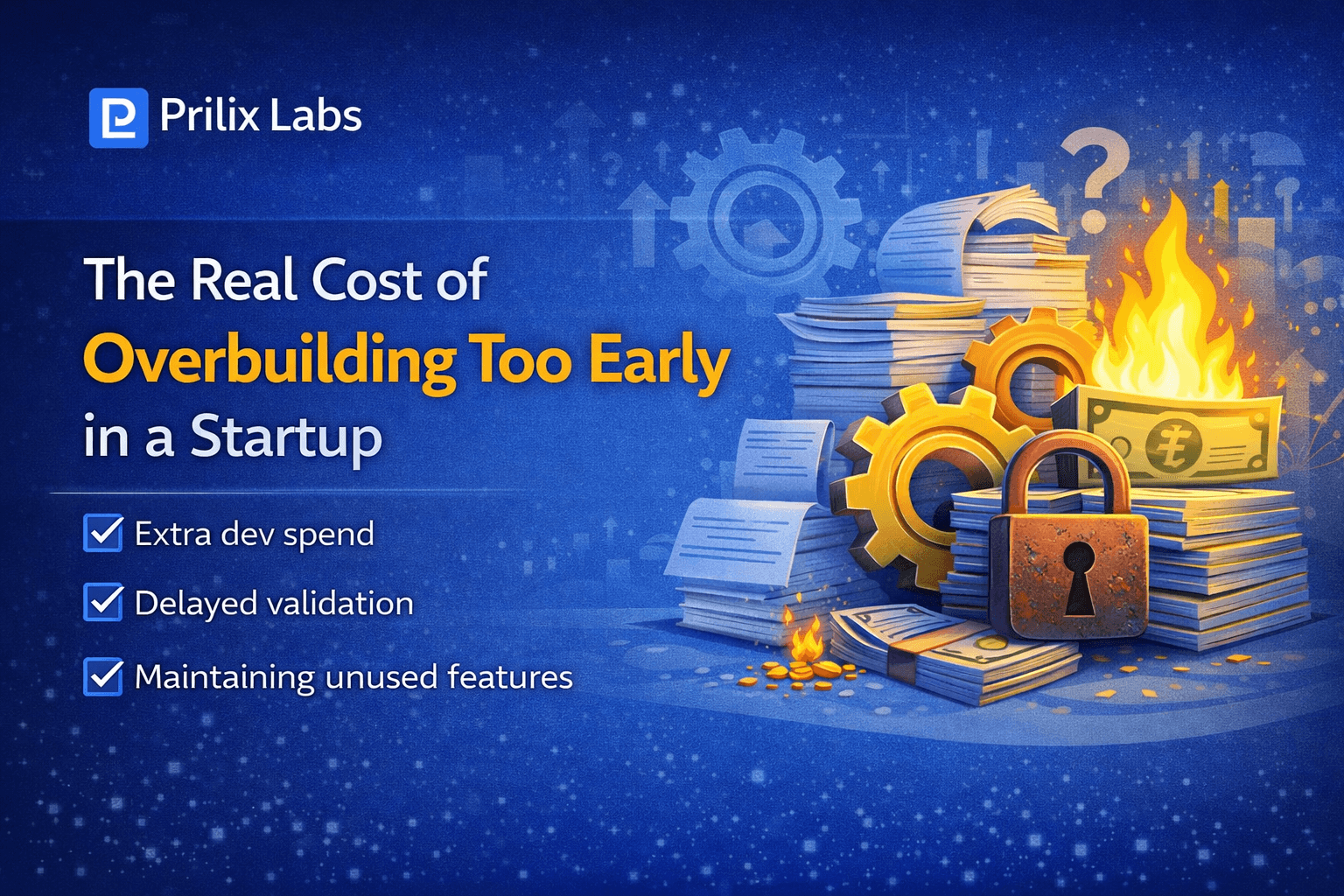
The Real Cost of Overbuilding Too Early in a Startup
A founder-focused guide to the real cost of overbuilding: budget waste, opportunity cost, and how to avoid building too much too soon.
Key Takeaways
- 01
Overbuilding costs more than the extra development. It delays validation, burns runway, and locks you into features users may not want.
- 02
Short answer: Direct cost, opportunity cost, lock-in cost, complexity cost, runway cost. Build minimal, validate fast.
- 03
Strong scope decisions come from resisting the urge to add. You can add; you cannot un-build.
- 04
Shorter, clearer sections make the article easier to scan and easier for buyers to act on.
- 05
Common founder mistake: Treating overbuilding as insurance. It is debt. You pay for it in delayed validation and maintenance.
- 06
The best next step is usually to create an explicit defer list and ship minimal.
The Real Cost of Overbuilding Too Early in a Startup matters because buyers do not reward software that is only technically correct. They reward software that solves a real workflow, looks credible, and is easy to evaluate. A founder-focused guide to the hidden cost of overbuilding.
If you are researching overbuilding, the useful questions are practical ones: what should be built first, what should be delayed, where does the budget really move, and which tradeoffs are worth making now. That is the frame this guide uses.
Quick answer
Overbuilding costs more than the extra development. It delays validation, burns runway, and locks you into features users may not want. Build minimal, validate fast.
- Direct cost: extra development spend.
- Opportunity cost: delayed validation, slower learning.
- Lock-in cost: maintaining features nobody uses.
Who this guide is for
This article is for founders and buyers who want to understand the real cost of overbuilding.
It is written to help teams resist the urge to build more than needed.
- Useful when the backlog is larger than the budget.
- Useful when the founder needs to cut scope without losing the product thesis.
- Useful when the first release must support customer conversations, pilots, or revenue.
The real cost of overbuilding
The goal is not to create more theory. The goal is to show the costs that are often invisible.
| Cost type | What it is | Typical impact | How to avoid |
|---|---|---|---|
| Direct cost | Extra development spend | 20-50% more budget | Strict scope, defer list |
| Opportunity cost | Delayed validation | Months of wrong direction | Ship minimal, learn fast |
| Lock-in cost | Maintaining unused features | Ongoing support burden | Build only what validates |
| Complexity cost | Harder to change later | Rebuild or workaround | Keep first version simple |
| Runway cost | Burned before validation | Less time to pivot | Validate before scaling |
Why founders overbuild
The first release should prove something concrete: that a buyer will care, that a user will adopt the workflow, or that the product can replace a painful manual process. Without that frame, the build drifts into generic software effort.
Fear of underbuilding
Founders worry the MVP will not be enough. But underbuilding is easier to fix than overbuilding. You can add; you cannot un-build.
"Just one more" feature
Small features add up. Each seems cheap. Together they delay launch and burn budget.
Competitor comparison
Comparing to mature products leads to feature creep. Compare to your stage, not theirs.
Common founder mistake
The common mistake is treating overbuilding as insurance. It is not. It is debt. You pay for it in delayed validation and maintenance.
Founder note
When the workflow is genuinely custom or operationally messy, early software consulting input can help define the minimal scope and avoid overbuilding.
Avoid overbuilding checklist
- Name the single outcome this release must prove.
- Cut any feature that does not support the main workflow.
- Create an explicit defer list. Nothing gets added without removing something.
- Ship and validate before adding more.
- Compare to your stage, not to mature competitors.
What to do next
If you are importing these JSON files into MongoDB, this is the content shape you want: clean headings, clear box sections, visible lists, and one practical table.
Apply this in a real project
If you’re planning to build or improve software based on these ideas, our custom software development services can help you define scope, reduce delivery risk, and ship maintainable systems.
For founder-led execution, explore our product development services and web development services to turn requirements into a working release with clear ownership.
Expert Insights
You can add; you cannot un-build
Underbuilding is easier to fix than overbuilding. Add features when validation proves the need. Un-building is expensive and demoralizing.
Overbuilding is debt
Overbuilding is not insurance. It is debt. You pay for it in delayed validation, maintenance, and complexity. Build minimal.
Compare to your stage
Comparing to mature competitors leads to feature creep. Compare to your stage. What do you need to prove next? Build only that.
Reader Rating
Based on 1 reviews
Frequently Asked Questions
What is the real cost of overbuilding?+
Why do founders overbuild?+
How do I avoid overbuilding?+
Is it better to underbuild or overbuild?+
What should I do with features I want to add?+
Reader Questions
How do I know if I am overbuilding?
If you cannot name the single outcome this release must prove, or if you have more than one core workflow, you are likely overbuilding.
What part of the project should I focus on to avoid overbuilding?
Focus on the single outcome and the core workflow. Everything else goes on the defer list. Resist "just one more."
How do I push back when stakeholders want more features?
Refer to the single outcome. Does this feature support it? If not, it goes on the defer list. Use the defer list as the gate.
Related Articles
Technology • 3 min
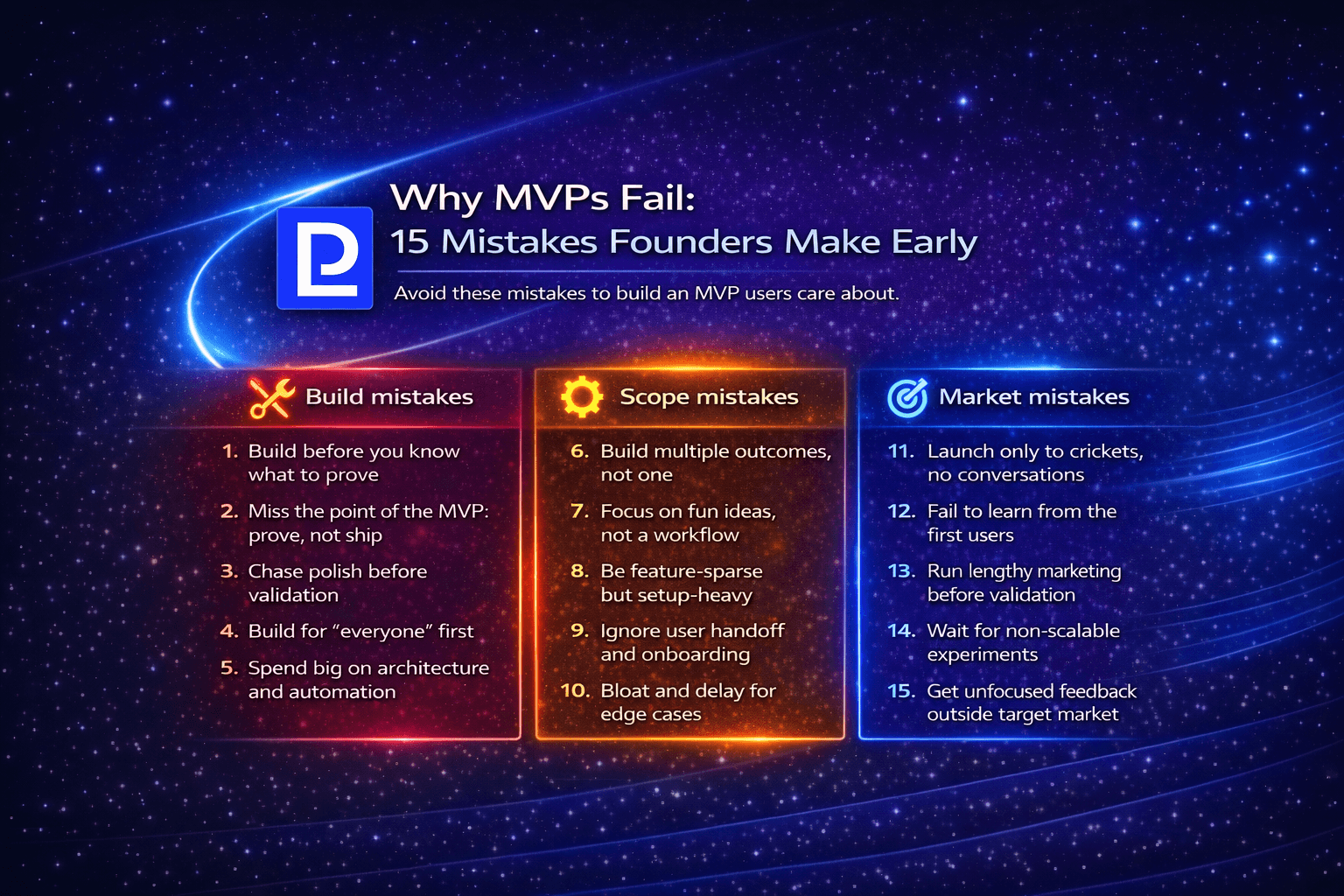
Why MVPs Fail: 15 Mistakes Founders Make Early
A founder-focused guide to the 15 most common MVP mistakes: what causes failure, how to avoid them, and how to build MVPs that actually validate.
Technology • 3 min
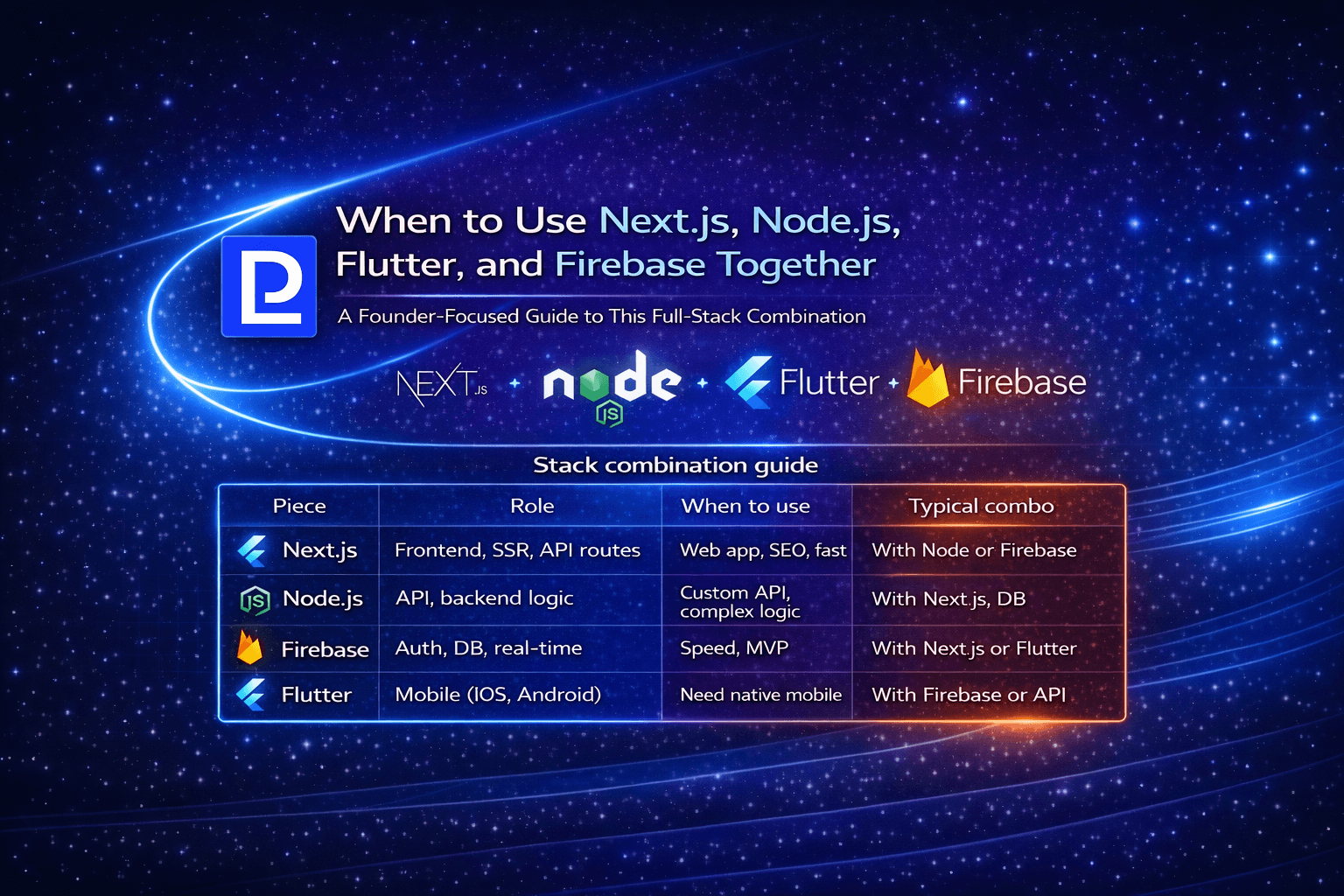
When to Use Next.js, Node.js, Flutter, and Firebase Together
A founder-focused guide to combining Next.js, Node.js, Flutter, and Firebase: when the stack makes sense and how to use them together.
Technology • 3 min
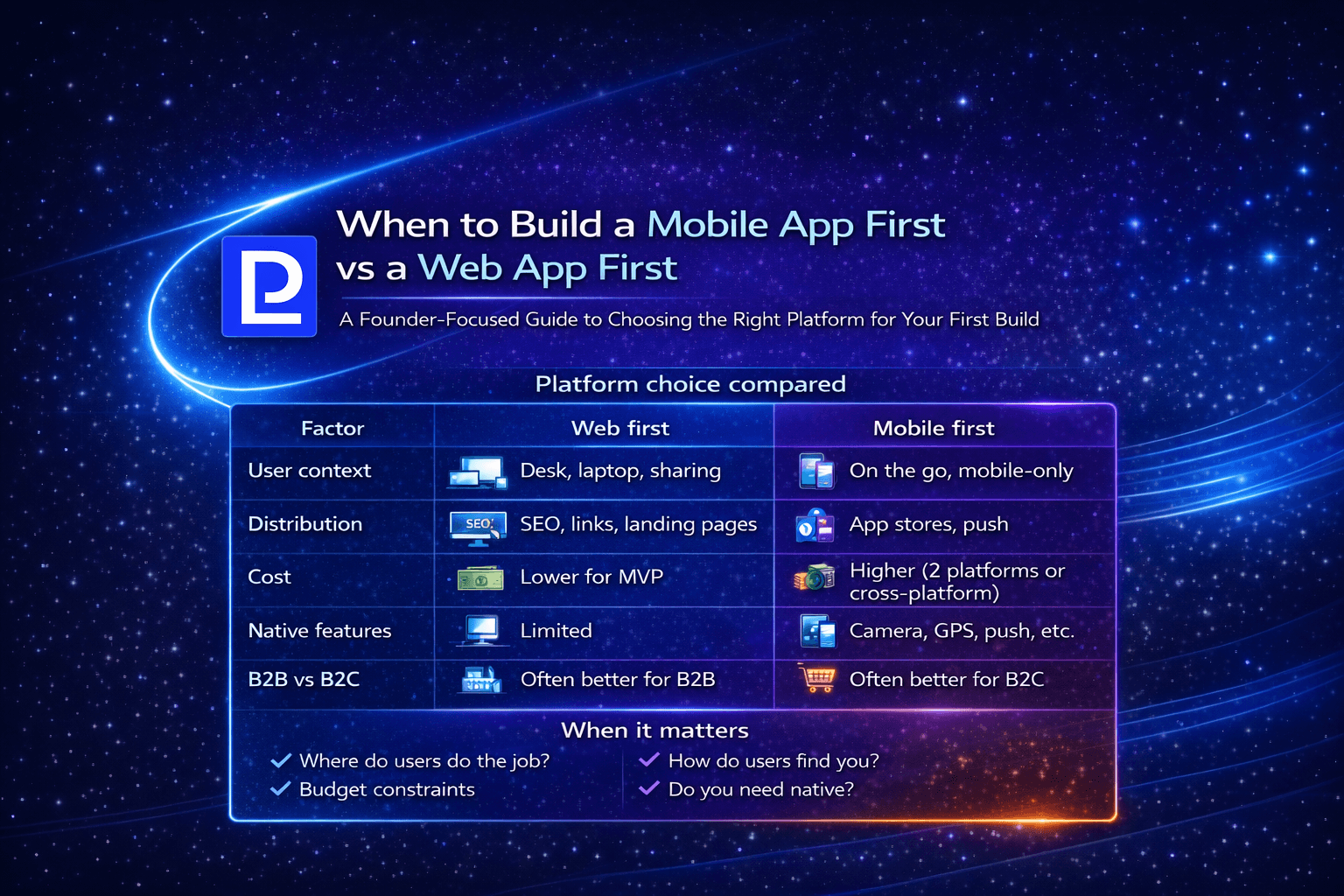
When to Build a Mobile App First vs a Web App First
A founder-focused guide to choosing mobile-first vs web-first: when each makes sense, tradeoffs, and how to decide for your product.