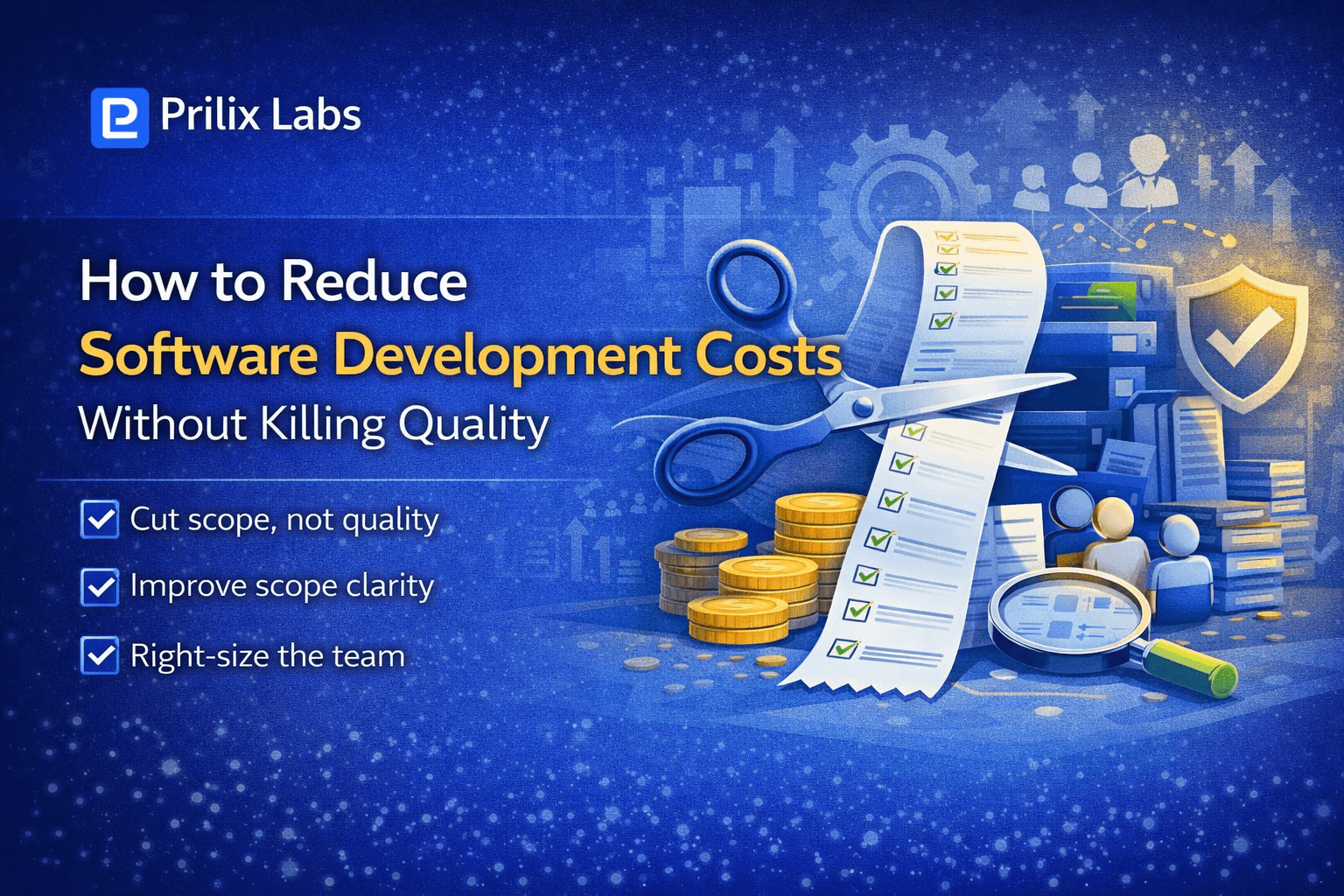
How to Reduce Software Development Costs Without Killing Quality
A founder-focused guide to reducing software development costs: practical tactics that protect quality while cutting budget.
Key Takeaways
- 01
Cost reduction works better when you cut scope, not quality. Focus on the core workflow, defer edge cases.
- 02
Short answer: Cut scope aggressively, improve clarity to reduce rework, use the right team size.
- 03
Strong cost decisions come from clear tradeoffs around scope, clarity, and team.
- 04
Shorter, clearer sections make the article easier to scan and easier for buyers to act on.
- 05
Common founder mistake: Cutting cost by hiring cheaper developers or skipping QA. Cut scope instead.
- 06
The best next step is usually a narrower scope with a stronger first release.
How to Reduce Software Development Costs Without Killing Quality matters because buyers do not reward software that is only technically correct. They reward software that solves a real workflow, looks credible, and is easy to evaluate. A founder-focused guide to cost reduction that protects quality.
If you are researching software development cost reduction, the useful questions are practical ones: what should be built first, what should be delayed, where does the budget really move, and which tradeoffs are worth making now. That is the frame this guide uses.
Quick answer
Cost reduction works best when you cut scope, not quality. Focus on the core workflow, defer edge cases, and improve clarity to reduce rework.
- Cut scope aggressively: one workflow, one outcome.
- Improve scope clarity to reduce rework and change requests.
- Use the right team size and engagement model.
Who this guide is for
This article is for founders and buyers who need to reduce software development costs without sacrificing the product.
It is written to help teams cut budget in the right places.
- Useful when the backlog is larger than the budget.
- Useful when the founder needs to cut scope without losing the product thesis.
- Useful when the first release must support customer conversations, pilots, or revenue.
Cost reduction tactics
The goal is not to create more theory. The goal is to show the tactics that actually reduce cost without killing quality.
| Tactic | What it does | Quality impact | When to use |
|---|---|---|---|
| Cut scope | Build one workflow, defer rest | None if core workflow intact | Always |
| Improve clarity | Reduce rework, change requests | Positive | Always |
| Right-size team | Avoid overstaffing | None if right-sized | When team is too large |
| Defer polish | Ship functional, not perfect | Minor for MVP | MVP stage |
| Use existing tools | Auth, billing, etc. | None | When fit exists |
| Pressure-test integrations | Avoid late surprises | Positive | Always |
What to cut vs what to protect
The first release should prove something concrete: that a buyer will care, that a user will adopt the workflow, or that the product can replace a painful manual process. Without that frame, the build drifts into generic software effort.
Cut: edge cases, polish, secondary workflows
Defer anything that does not support the core workflow or the measurable outcome.
Protect: core workflow, data model, auth, QA
Do not cut the things that make the product work or that are expensive to fix later.
Common founder mistake
The common mistake is cutting cost by hiring cheaper developers or skipping QA. That usually increases total cost through rework and bugs. Cut scope instead.
Founder note
When the workflow is genuinely custom or operationally messy, early software consulting input can help scope and reduce cost by avoiding rework.
Cost reduction checklist
- Name the single outcome this release must prove.
- Cut any feature that does not support the main workflow.
- Improve scope clarity: inclusion list, exclusion list, acceptance criteria.
- Use existing tools for auth, billing, etc. where they fit.
- Do not cut QA or core workflow quality.
What to do next
If you are importing these JSON files into MongoDB, this is the content shape you want: clean headings, clear box sections, visible lists, and one practical table.
Apply this in a real project
If you’re planning to build or improve software based on these ideas, our custom software development services can help you define scope, reduce delivery risk, and ship maintainable systems.
For founder-led execution, explore our product development services and web development services to turn requirements into a working release with clear ownership.
Expert Insights
Cut scope, not quality
The strongest cost reduction comes from cutting scope. Cheaper developers or skipped QA usually increase total cost through rework.
Clarity reduces cost
Ambiguity drives rework and change requests. Clear scope, inclusion lists, and acceptance criteria reduce cost without cutting quality.
Protect the core
Do not cut the core workflow, data model, or QA. Those are expensive to fix later. Cut edge cases and polish instead.
Reader Rating
Based on 1 reviews
Frequently Asked Questions
How should founders reduce software development costs?+
What should I never cut to save cost?+
Is hiring cheaper developers a good way to reduce cost?+
What is the biggest cost driver in software projects?+
Can I reduce cost without cutting features?+
Reader Questions
How do I know what to cut first?
Start with anything that does not support the core workflow or the measurable outcome. Edge cases, polish, and secondary workflows are the first to go.
What part of the project should I focus on to reduce cost?
Focus on scope clarity and cutting scope. Ambiguity and scope creep are the biggest cost drivers.
How much can I realistically reduce cost?
20-40% is often achievable through scope cuts and clarity. More than that usually requires significant scope reduction.
Related Articles
Technology • 3 min
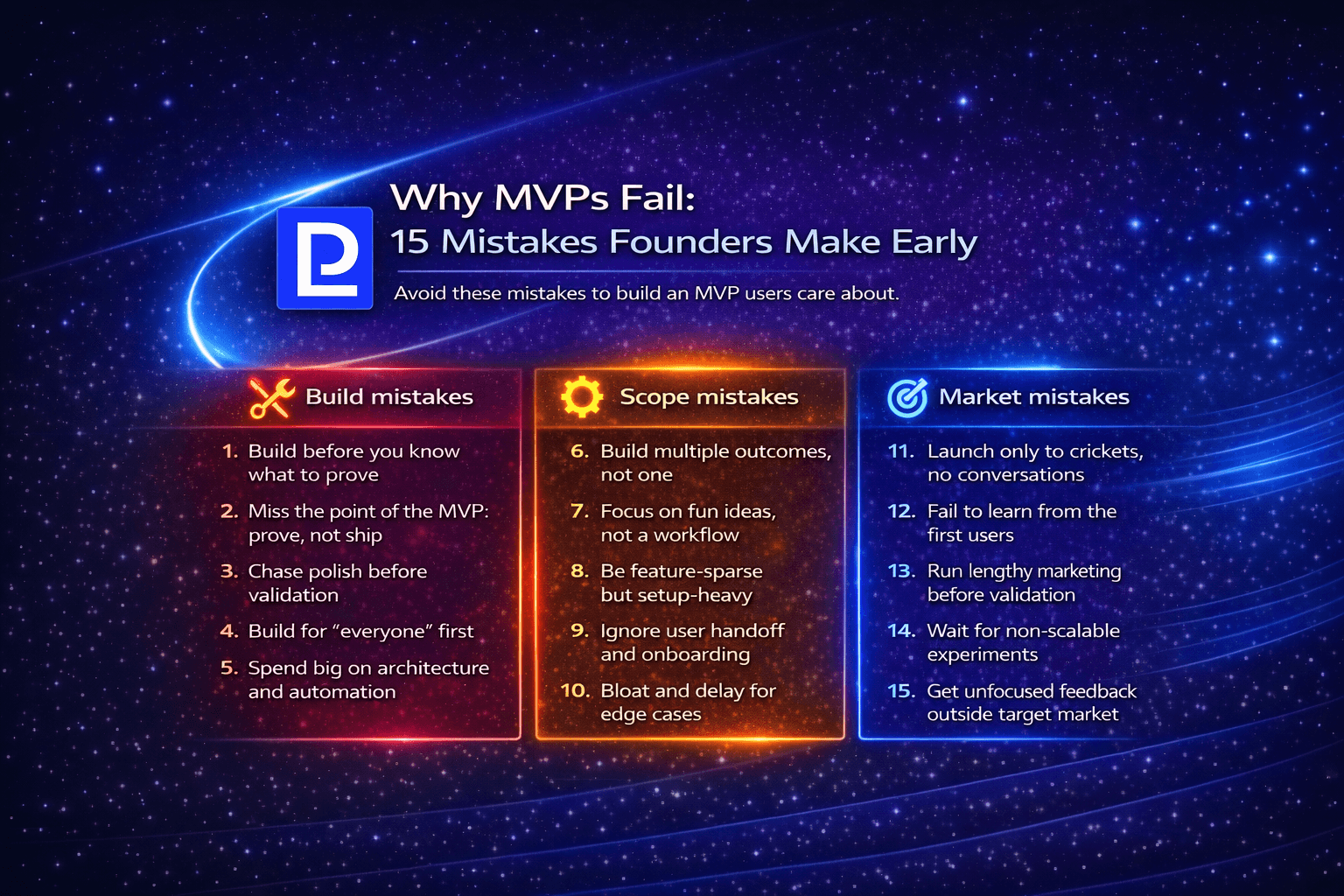
Why MVPs Fail: 15 Mistakes Founders Make Early
A founder-focused guide to the 15 most common MVP mistakes: what causes failure, how to avoid them, and how to build MVPs that actually validate.
Technology • 3 min
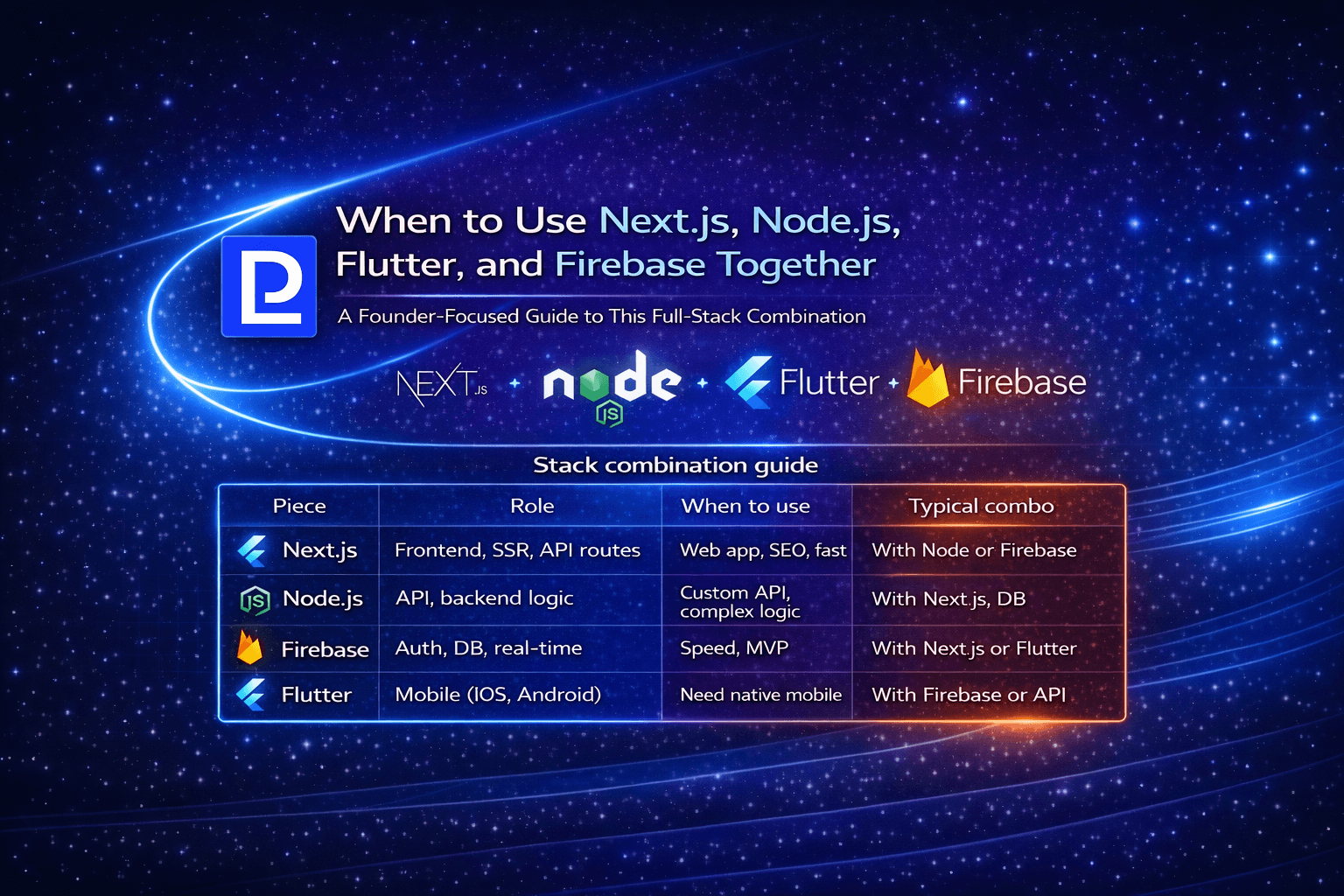
When to Use Next.js, Node.js, Flutter, and Firebase Together
A founder-focused guide to combining Next.js, Node.js, Flutter, and Firebase: when the stack makes sense and how to use them together.
Technology • 3 min
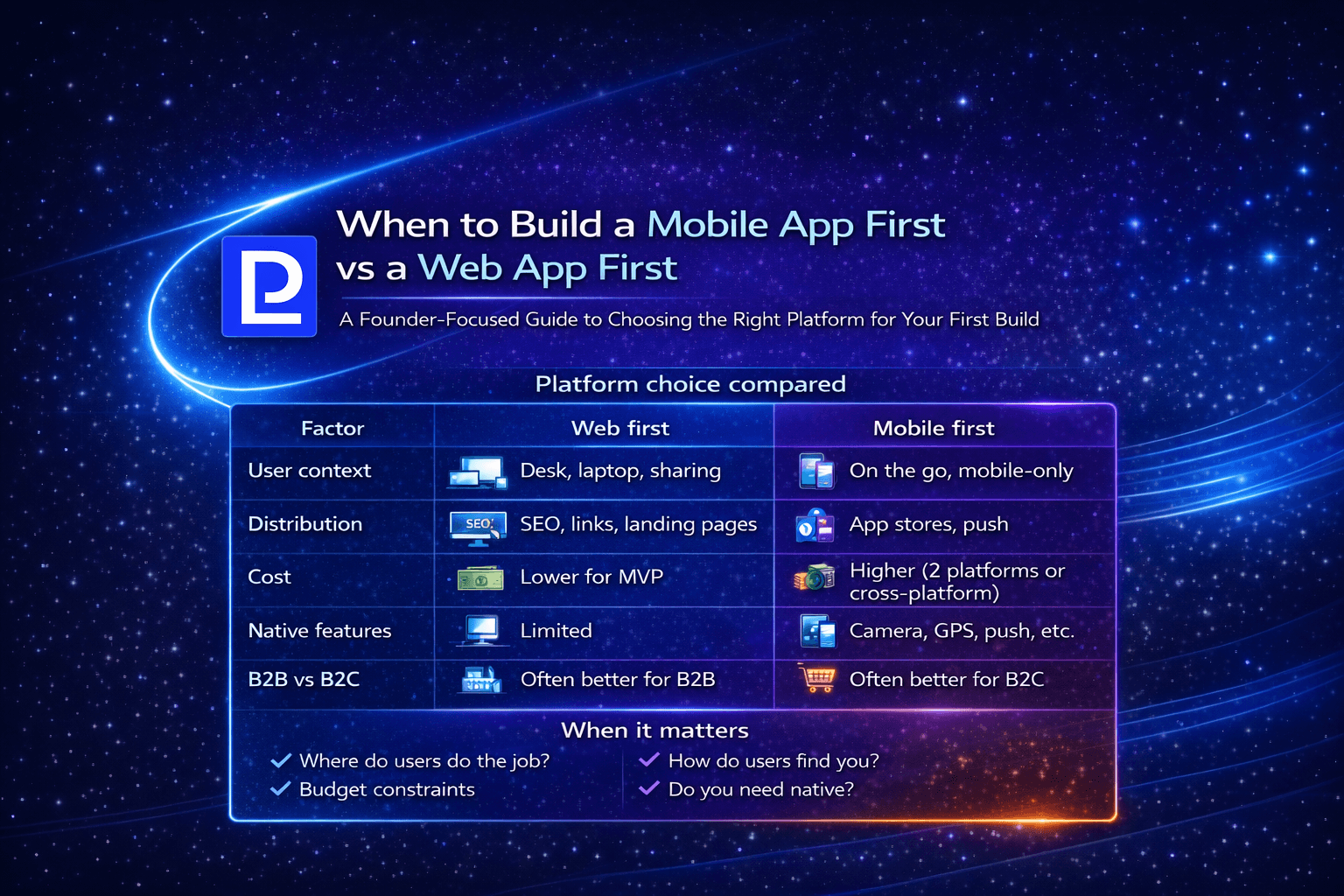
When to Build a Mobile App First vs a Web App First
A founder-focused guide to choosing mobile-first vs web-first: when each makes sense, tradeoffs, and how to decide for your product.